Showing posts with label LGBTQ. Show all posts

Tuesday, September 29, 2015

2016 Contenders: George, by Alex Gino

Guest review by Tess Goldwasser:

There are four things I want you to know about George by Alex Gino.

1. George is an important book.
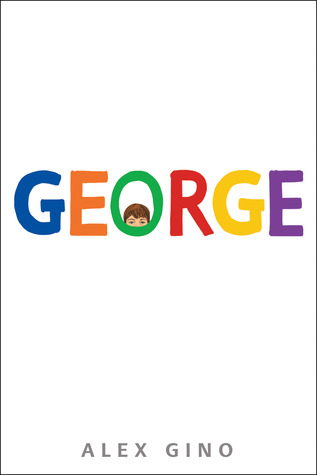
George is a book about George, a boy who is actually a girl. Simply put: George’s outside doesn’t match her inside. She’s a girl trapped, for all intents and purposes, in a boy’s body. George is transgender, and this is hard for her, as you can imagine. Her fourth grade class is performing a play of Charlotte’s Web and George wants to play Charlotte more than anything. But the part is for a girl, and the only person who knows George is really a girl… is George… for now… Dr. Jamie Campbell Naidoo once said to me: books should be mirrors and windows. Good literature should reflect our personal experiences, or offer new perspectives on the experiences of those who are different from us. George will be a mirror or a window to whomever picks it up, and this is important. Dialogue about the transgender experience is important. We should be striving to understand and accept one another.

2. George is a controversial book.

Many will question whether a book about the transgender experience is appropriate for children. It’s a valid question. Are books about slavery appropriate for children? Are books about the holocaust appropriate for children? Are books about Hurricane Katrina appropriate for children? Are books about beloved pets/friends/family members dying appropriate for children? All of these questions are up for debate. I’ll admit there were parts of George that made me uncomfortable, parts that made me wonder: Will a child get this? And if so will it upset them? Ultimately, I feel it’s okay for kids to read things they may not fully understand, and it’s okay for kids to read things that might make them upset. Reading the experiences of characters, and having feelings about them, makes a reader compassionate, and I want the world to be filled with compassionate readers. (And for the kid who is actually living the transgender experience, I believe it’s indubitably 100% appropriate.)

3. George is a painful book.

There are parts of George that are heartbreaking. The conflict between what society expects of George, and what she feels inside is visceral for any sensitive reader. I found the suspense of wondering whether or not George will come out to her loved ones, and whether or not they will accept her, to be downright spine tingling. I lost count of the times I wanted to reach into the book and give George a comforting hug. Despite the book's relatively short length, I wouldn't categorize it as a light read by any means. At one point George says she feels like the butterflies in her stomach have butterflies in their stomachs and all I could think was "YASSS GURL I KNOW!"

4. George is a joyful book.

A colleague, Paula Willey, described George to me as "this year's Wonder" (referencing the uplifting 2012 novel by R.J. Palacio) which caused me to immediately pick it up, because I love books that make you triumphantly pump your fist in the air at the end. George, against the odds, is one of these books. I don't want to spoil the ending for you, but I've never been so happy for someone going to the bathroom in my life. I don't know how authentic the ending is, how many transgender people get to have days like the days George has as she finally embraces her inner self. I hope they do because it was lovely to read, like a fairy tale come true.

I don’t know how much attention this is getting from the Newbery committee. I hope some. I presume it’s getting a lot of attention from the ALA Stonewall Book Award committee. But whether it wins any awards at all is inconsequential to me. What will be most important about this book is that it will hopefully find its way to the readers who need it. (After all, the book is dedicated to “you”)

Tess Goldwasser is a magical ukelele-playing octopus in the guise of a children's librarian. She has served on the Stonewall Book Award Committee and the GLBTRT News Committee, and she is currently chairing the GLBTRT Advocacy Committee. 

Tuesday, July 28, 2015

2016 Contenders: Stonewall: Breaking Out in the Fight for Gay Rights, by Ann Bausum

It is impossible to review Ann Bausum's new chronicle of the gay rights movement without thinking about where I was one month ago today: standing on Market Street in San Francisco, watching the biggest, most joyous Pride parade I have ever witnessed. It was two days after we all woke up to learn that the Supreme Court had granted same-sex couples the right to marry in all 50 states, and the mood in the city was total jubilation. The parade itself felt incredibly uncontroversial, with every corporation you can think of trying to get in on the act and soak up some of that LGBT goodwill. The Apple employees alone took up several city blocks.

Contrast that with the way things stood on the eve of the Stonewall Riots. Marriage equality was such a distant dream that Richard Enman, representing the Mattachine Society, said, regarding the legalization of same-sex marriage, "Homosexuals don't want that." "Cross-dressing" was a criminal offense, homosexuality was listed as a mental illness in the DSM, and men trying to pick up a date might be told to "keep moving, faggot, keep moving."

Bausum does an excellent job of evoking that time and place with a chatty prologue that addresses the reader directly and invites us to walk the streets of Greenwich Village with her. She maintains that sense of immediacy through the next several chapters, quickly establishing the historical backdrop and then plunging us into a play by play of the events at the Stonewall on June 27, 1969. She combines eyewitness accounts with historical context and broader social analyses to form a full picture of the significance of the riots. And she doesn't shy away from plainspoken descriptions of the gay experience in 1969, from sex in unlocked semi-trucks previously used to haul animal carcasses, to the raunchy chants that gay teenagers shouted at the police.

While the entire first half of the book is concerned with the lead-up to and immediate aftermath of the riots, the second half touches, in less detail, on the ensuing gay rights movement, including the AIDS crisis and the fight for marriage equality. Of course, despite the fact that the publication date is May 5, 2015, the book is already out of date, because it doesn't include the recent Supreme Court decision. Sam and I were speculating about whether Viking will release an updated edition, but things are moving so quickly that it might be impossible to keep up. Just last week, several legislators introduced the Equality Act, a comprehensive federal non-discrimination bill. 

As the LGBT community continues to rack up victories, it will become ever more difficult to remember this history of brutal oppression. Bausum's book serves as an essential reminder of that history, honoring those who risked their lives to pave the way, and, I hope, providing inspiration to the next generation to continue the fight.

I think it's unlikely that Stonewall will receive Newbery recognition. Despite the immediacy of Bausum's prose, I wouldn't call it narrative nonfiction on the level of something like Bomb, and it feels like a strong year for fiction. I won't be at all surprised if it the Sibert Committee honors it, though, and it seems like a shoo-in for the Stonewall Book Award. (There's a question: has a book ever won its namesake award before?)

Published in May by Viking Books for Young Readers


Tuesday, March 3, 2015

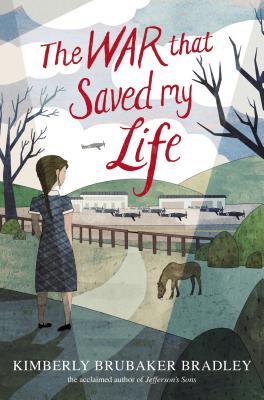
2016 Contenders: The War That Saved My Life, by Kimberly Brubaker Bradley

Ten-year-old Ada has never left her squalid, one-room London apartment. Born with a clubfoot that her abusive and neglectful mother has left untreated, she sits in her chair and looks out the window all day. Caring for and protecting her little brother Jamie provides the only joy and meaning in her life, and ultimately motivates her to begin the painful process of teaching herself to walk. This is all taking place in the run-up to the second world war, though, and when the children of London are evacuated to the countryside, Ada's life changes in every way.

This is not the first novel that has seized on the evacuation of London's children to set its plot in motion. The Lion, The Witch, and The Wardrobe and Bedknobs and Broomsticks are two classic examples. But whereas the plots of those books rely on the benign neglect of the children's temporary guardians, The War That Saved My Life goes in the opposite direction. Only with Miss Susan Smith, their reluctant foster mother, do Ada and Jamie discover for the first time what it means to be cared for and loved.

My instinct is to be cautious in my assessment of this book, because my emotional reaction to it was strong, and because I listened to the audio version, which is narrated masterfully by the inimitable Jayne Entwistle (seriously, go listen to something she has narrated - she is just divine). After some thought, however, I feel confident in recommending it as both emotionally satisfying and finely crafted.

Ada and Susan Smith are nuanced, complex characters who grow in realistic ways throughout the course of the novel. Ada's traumatic experiences are given the narrative weight they deserve. As she begins the process of healing her psychological wounds, she runs up against the setbacks and regressions that would be inevitable for a child who has never felt safe or loved. Susan, who struggles with depression, and who is mourning the loss of her partner Becky, turns out to be the ideal parent for Ada. She approaches Ada and Jamie with patience, and with empathy born of her own experiences with parental disapproval.

If The War That Saved My Life excels in the areas of character development and emotional realism, however, I'm not sure I can say the same about the plot. The conclusion is satisfying and triumphant... as Tess Goldwasser said of Wonder, it makes you want to pump your fist in the air! As such, it stretches the bounds of credibility just a little bit. Ultimately, though, I have to forgive it that, and agree with the Horn Book's Martha Parravano that "this is a feel-good story, but an earned one." (Possibly unlike Wonder.)

It's early in the year, and there are some major challengers on the horizon (can't wait to get my hands on Gone Crazy in Alabama), but I can see The War That Saved My Life being a strong Newbery contender.

Published in January by Dial Books


Wednesday, November 19, 2014

2015 Contenders: Gracefully Grayson, by Ami Polonsky

Twice within the last year or two, while attending a library conference, I attended a presentation about children's books that deal with LGBTQ themes. In both cases, after discussions about picture books and YA novels, someone asked about middle-grade novels. Both times, the presenters -- experts in their field -- didn't have much to say. There's Tim Federle's first and second books about Nate Foster, Jennifer Gennari's My Mixed-Up, Berry Blue Summer, and...probably some others? The list of titles was vanishingly brief; authors and publishers have largely shied away from including the topic.

There are signs, however, that this taboo is beginning to be less powerful. This year alone, we've seen the second Nate book, The Misadventures of the Family Fletcher, and Ami Polonsky's debut novel, Gracefully Grayson, whose main character is a twelve-year-old struggling to carry the secret that, though biologically male, she internally identifies as female.

Although children's books have included plot-driven instances of cross-dressing at least since Huck Finn was skulking around in girls' clothing, I'm at a loss to think of another middle-grade novel featuring a main character who is transgender. Tellingly, Wikipedia's "List of books featuring transgender persons" only has four titles on it; three YA novels, and a 2012 picture book called The Adventures of Tulip, Birthday Wish Fairy. I could be forgetting or overlooking something -- and if I am, please let me know in the comments! -- but in large part, Gracefully Grayson is sailing in uncharted waters.

It does my heart good, then, to note that Polonsky's novel handles its material so well. Its main characters are vibrant and clearly drawn, its prose spare and often elegant, and its sense of place -- the Chicago area as fall creeps into the dark Midwestern winter -- is highly evocative. Although it's true that this is a story of a transgender "boy" taking a chance by trying out for the female lead role in the school play, and in the process, coming to terms with her own identity, it felt less to me like that sterile description, and more just like Grayson's personal story. I found the text refreshingly engaged with telling a particular narrative that belonged to a specific character, rather than some kind of quasi-political or archetypal myth. 

That's not to say that the book is without flaws. The plot uses some extremely familiar tropes: the school play as a key event, the orphaned protagonist, the letters from the dead mother, the death of a grandmother. Although I feel like these elements are sometimes used in a subversive manner, sometimes they're just cliches. Some of the secondary characters don't have a lot of depth, and some of the dialogue that the adults in particular have comes across as a tad soap-operaesque. However, I didn't find these flaws overwhelming, and I enjoyed spending time in this book's world.

I think the chances of Gracefully Grayson winning the Newbery are remote, given the strength of competition this year. However, I'm more than a little curious to see what the Stonewall committee thinks of it, and I'll be eagerly following Ami Polonsky's career from here on out.


Publication in November by Disney/Hyperion 


**Note:  Given the evolution of Grayson's sense of identity within the novel itself, figuring out which pronouns &c. to use while writing this review was really challenging for me. I tried my very best, and used the book jacket description for help, but I'm not an expert, and I apologize in advance if I didn't get it right.

Thursday, September 11, 2014

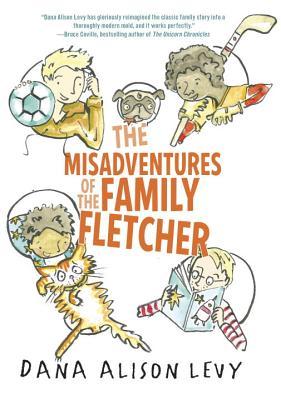
2015 Contenders: The Misadventures of the Family Fletcher, by Dana Alison Levy

Back in 2005, Jeanne Birdsall did such a good job of updating the traditional "family novel" that her effort, The Penderwicks, won the National Book Award for Young People. I am, *ahem*, kind of a Penderwicks fan, but I have to give some credence to one of the most common critiques of the series: that in attempting to establish a "timeless" tone, Birdsall actually fails to create an accurate portrait of the modern world. There are cell phones and computers in Penderwickia, but they are rarely used. The sisters never play video games. I don't think they even mention tv.

Not so with the Fletchers, of Dana Alison Levy's debut novel, The Misadventures of the Family Fletcher. The Fletchers text and email (sometimes with hilarious results). They say "dude," and "sick," and "awesome," and occasionally other, less printable words* (they all contribute to a "rude word jar" when they slip up).

They are a thoroughly modern family in composition and background as well: two dads and four adopted sons (two white, one African-American, one Indian). Levy deliberately downplays the diversity of the family - letting their traits and backgrounds emerge naturally in the course of the narrative - and in doing so she makes her focus clear. This is primarily a family story, in the classic mode of All-Of-A-Kind Family, Little Women, and Ginger Pye, and the Fletchers just happen to reflect what a family might look like in the 21st century.

In her own Goodreads review of the book, Levy says, "I'll be honest, I am a sucker for `comfort food' books - you know, books you can curl up with and feel like the world is an okay place for a little while," and that is exactly what you should expect from the Fletchers: comfort. Everyone in their little Massachusetts (I think? Possibly Maine?) town seems cool with the whole gay parenting thing, and the boys worry more about being ostracized for their thespian leanings than their racial backgrounds. Is that a flaw in the book? I would argue that it's not, because one, it's reflective of the genre, and two, isn't this what we mean with the whole "we need diverse books" campaign? That we need books about all kinds of diverse characters leading all kinds of lives?

I have to admit, though, that this book is precisely my cup of tea, so I'm biased. If I were on the Newbery Committee, it would definitely be a contender for one of my nominations - great characters, lots of humor, multiple well-realized settings, etc. Once we reached the discussion stage, I'm sure one of my other committee members would help me see it through less rosy lenses.

Since I'm just armchair quarterbacking, though, I'll just sit here and bask in the Fletchers' glow (until one of you'un comes to tell me otherwise).


*And can I just say how happy that makes me? Granted, the Penderwick paterfamilias deals with the chaos of the household by retreating to his office as often as possible, but even so, you can't tell me that having four children in the house would not result in the parent(s) screaming profanity at least once a week. I mean, I only have one child, and if I had a rude word jar in my house, its earnings would probably outpace my 401K.

Tuesday, February 4, 2014

2015 Contenders: Five, Six, Seven, Nate!, by Tim Federle

When last we saw our hero, Nate Foster, at the conclusion of Better Nate Than Ever, he was receiving incredible news that after his daring, not-sanctioned-by-his-parents journey from the boring Pittsburgh suburb of Janksburg to the sparkle-bright-metropolis of New York City, to audition for his big Broadway break in ET: The Musical, has ended in his ACTUALLY BEING CAST. In the chorus. But also as the understudy for the title character!
This sequel, Five, Six, Seven, Nate!, begins with Natey Greaty preparing to be a for-real child actor. He’s packing up and moving to NYC to live with his Aunt Heidi, and rehearse for the show of a lifetime, ET: The Musical. What could possibly go wrong?
How about, the fact that Nate doesn’t really know how to tap dance? Or that he’s not really the understudy for ET, but the understudy for the understudy, Asella, a charismatic veteran of the stage? Or that the first time director doesn’t appear to really know what he’s doing, and seems to be caught up in a never-ending power struggle with the choreographer? Or that Nate’s having trouble not noticing all the really cute boys in the cast? (Like, seriously, he knows where they are and what they’re doing at all times during the show.) Or that he’s surprisingly homesick, at least for his best friend Libby, though he’s a bit at a loss about how much of his new life he feels comfortable sharing with her?
Young theater fans will be obsessed with this book, as it actually shows what goes on behind the scenes of a Broadway musical. For instance, I didn’t know there’s always a set of “preview” performances, before a show opens for the public, that some musicals don’t make it past!
In terms of delineation of theme, plot, character, and setting, Nate is basically a perfectly written novel. But it’s a long shot for the Newbery medal, based on its early-in-the-year publication date, and the fact that fun, funny books rarely win awards. And Nate is REALLY fun and REALLY funny. But fun and funny don’t equate to not important. This book’s sensitive treatment of Nate’s coming of age, and questioning of identity, make it a truly great piece of literature.
Tess also told me I had to put this book trailer in here somewhere.
*******
Today's guest reviewer is Tess Goldwasser, Youth Services Librarian and Early Childhood Community Liaison, St. Mary's County Library, Maryland. Tess also writes about picture books at Kid's Book Blog.

Tuesday, July 23, 2013

2014 Contenders: Better Nate Than Ever, by Tim Federle

Thirteen-year-old Nate Foster is your quintessential small-town social outcast. He's chubby, terrible at sports, and prone to belting out Broadway songs in public bathrooms. When he and his loyal BFF Libby learn about an open casting call for the Broadway musical adaptation of E.T., they hatch a plan. Nate will take the bus from Pennsylvania to New York, audition, and be on his way home before his family ever knows he's gone. Naturally, things don't go exactly according to plan.

I love this book. It's just so loveable, as is its plucky, awkward protagonist, and it is Nate, as character and as narrator, who carries the novel on his sweaty middle school shoulders. Debut novelist Federle really nails the voice of a kid at the worst, in-betweeniest age. Sometimes Nate is wiser than his years, but more often he is painfully and hilariously naive. On his first visit to New York, he's starstruck by the "biggest Applebees in the world," and tries to strike up a friendship with a street hawker. A lot of this is played for laughs, but by the end of the book the tone grows gradually more poignant.

And that brings us to Federle's second great accomplishment: this is an LGBTQ book without being an LGBTQ book. Nate never states outright that he is gay - in fact, by the conclusion, he's only just begun to tentatively question his sexual identity. In both obvious and subtle ways, though, Nate's urban odyssey leads him towards that process of introspection. One of the most powerful passages comes when Nate explains the allure of New York to his aunt's (gay) roommate. "`Two boys were dancing together in a club,' I want to say, `and nobody stopped them.' But instead I say `I want to be on Broadway, and you can't do that forty-five minutes outside of Pittsburgh.'"

Broadway is a stand-in for gay, in a way, but it also isn't. Nate really does want to be a Broadway star - badly. He also wants to live in a place where he doesn't get beat up on a regular basis for his perceived homosexuality. The story can be about both things, Federle seems to say. Text and subtext are always intertwined.

Better Nate Than Ever is not without its flaws. It's a bit slow to start, and some of the structural choices (such as the parenthetical flashbacks in one chapter) are questionable. There's a lot of landscape - both inner and outer - to keep track of, and a lot of characters too. For the most part, though, Federle has done an admirable job of keeping it all together.

The verdict? I suspect Nate may be this year's Wonder or Okay for Now. Lots of popular accolades, lots of critical praise from outside the library bubble, a heartwarming message, etc. I think it's better than both of those books, but this is the kind of crowd-pleaser that the committees often seem to snub.

Published in February by Simon & Schuster


Thursday, December 20, 2012

2013 Contenders: My Mixed-Up, Berry Blue Summer, by Jennifer Gennari

Twelve-year-old June Farrell's life isn't complicated. She swims and boats in Lake Champlain with her friend Luke, helps her mom at the Stillwater Marina Shop, and plans to win this year's pie-baking contest at the Champlain Valley Fair. However, when her mom's girlfriend Eva moves in, June finds herself unwillingly drawn into the controversy over Vermont's new civil union law -- a controversy that divides communities, families, and even June's own mind.

Set in the summer of 2000, when the Vermont law went into effect, My Mixed-Up, Berry Blue Summer tackles a tough issue head-on. June is a sympathetic character, fierce in her love for her mother, uncertain how to deal with some of her neighbors, and pained by the realization that her dreams of having a father are destined to go unfulfilled. Jennifer Gennari used to live in Vermont, and she fills the book with small but beautiful details about the setting -- the rocky cliffs where the best berries grow, the way different weather affects the look of the lake, the noise of the hungry seagulls.

In honesty, those details made me wish the book were longer. At 119 pages, it simply doesn't have time to fully explore all its subplots, or to render its supporting characters entirely three-dimensional. The novel's brevity also means that the events of the last third of the book feel like they pile on top of each other too quickly, giving it an almost soap opera-esque tone that I don't think helps the story.

Those flaws mean that My Mixed-Up, Berry Blue Summer is highly unlikely to show up on the Newbery list. However, it's still a pleasant, engaging read. Even more than that, it's good to see another middle-grade novel from a major publisher that takes on LBGTQ issues and yet isn't solely a heavy-handed polemic. This is Gennari's first novel, and I'm really interested to see what she decides to write next.


Published in May by Houghton Mifflin Books for Children