Tuesday, May 5, 2015

2016 Contenders: Historical Animals, by Julia Moberg

Books that pair poetry with nonfiction facts seem to be in vogue as of late. It's a structure that I associate most with Joyce Sidman, but Historical Animals is the second non-Sidman book we've reviewed this year (Random Body Parts is the other) that also utilizes this format.

However, if Random Body Parts was no Winter Bees or Dark Emperor, Historical Animals is no Random Body Parts. The brief poems, each of which describes a famous animal from history, possess some of the most awkward meter I've read in a long time, and are filled with rhymes that are forced, or that are noticeably approximate. I can't immediately think of another volume of modern children's poetry I've read that is as technically inexpert.

The nonfiction sections are, if anything else, even more difficult to deal with. The facts are often presented with little context, to the point of being shorn of meaning. We're told, for instance, that the poet Virgil spent 800,000 sesterces on a funeral for his housefly, but not what a sesterce was, or how much one was worth. This problem is compounded by the fact that the book contains no source list, no suggestions for further reading, and no glossary.

The book also suffers from sloppy editing. Errors include writing BCE for CE (pg. 22); spelling the name of the country as "Chili" (pg. 26); and stating that Florence Nightingale wrote a book in 1959 on the same page that lists her date of death as 1910 (pg. 40). Historical Animals also features awkward constructions ("Tortoises have the same life span as humans. Some can live from ninety to one hundred and fifty years old."), disconcerting word choices ("Dolly was named after the performance artist Dolly Parton."), and questionable taste (claiming that South American penguins like "life as Latinos"). 

Even the layout and illustrations seem subpar. I couldn't understand the logic by which some of the headings carried the names of the animals themselves, while others listed the name of the person who owned them. The cartoonish pictures, credited to Jeff Albrecht Studios, may attract the eyes of younger readers, but also make errors such as giving the famed rescue dog Barry der Menschenretter the incorrect colors.

Obviously, I don't think Historical Animals should or will win anything. Charlesbridge usually puts out much better titles, and I do expect that other books that they produce will be of higher quality than this one.


Published in February by Charlesbridge / Imagine!


Wednesday, April 29, 2015

2016 Contenders: Inventions That Could Have Changed the World...But Didn't!, by Joe Rhatigan

Inventions That Could Have Changed the World...But Didn't! is exactly the kind of book that my ten-year-old self would have devoured in a single sitting. It's sort of a curiosity cabinet of commercially unsuccessful inventions and the people who devised them. Each failed invention is described briefly -- usually in less than half a page -- and accompanied by cartoon illustrations, patent drawings, photos, or some combination of these.

It's a quick, breezy read, and I think it would be a very easy reader's advisory sell for the kinds of kids who haunt the 000s looking for books of weird facts. However, it's put together less carefully than I'd prefer. For instance, the very first page of the book says, "Before lightbulbs, people went to bed when it got dark outside. (There was nothing else to do.)" That statement neatly overlooks the development of torches, candles, and oil lamps, and sacrifices accuracy for the sake of a witty observation.

The book is still a lot of fun, and it's nice to have internet links to things like an audiorecording of the demonic-sounding Edison Talking Doll and a video of some brave/foolhardy folks driving Dynaspheres. If I were still doing collection development, I would certainly purchase Inventions for my library.

I'm not entirely sure about the eligibility of Inventions for the ALA awards -- the copyright date is 2015, and Amazon lists it as having a 2015 publication date. However, Goodreads claims it was published originally in 2014, and the printing date is October 2014. Even if it's eligible, however, Inventions certainly won't win the Newbery, and I doubt the Sibert committee will show it any love either.


Published in February(?) by Imagine / Charlesbridge

Thursday, April 9, 2015

Digressions: two bits of Penderwick trivia.

My daughter and I finally got our hands on the audiobook version of The Penderwicks in Spring, so my favorite Massachusetts family has been much on my mind this week. This has led to a couple bits of silliness:

1. I finally looked up the GPS coordinates that Birdsall gives as the location of the Penderwick house. They lead to 49 Gothic St, Northampton, MA, which appears to house a massage therapy practice. I wonder if the address has some personal significance for Birdsall.

Honestly, I expected the coordinates to lead to the Eric Carle Museum or something.

Here's something fun, though: in the book, the Penderwicks always call upon Ernie's Service Station to care for their elderly vehicles, and there is actually an Ernie's Garage around the corner from that address! Curious.

2. Since music plays such an important role for Batty in this novel, I thought she should have her own playlist, including all of the songs that she hears, hums, listens to or loves. So here it is.


Wednesday, April 1, 2015

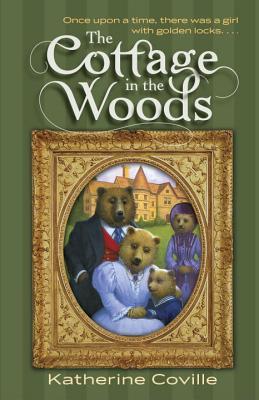
2016 Contenders: The Cottage in the Woods, by Katherine Coville

Fellow fans of The Wind in the Willows: have you ever tried to pin down exactly how big Toad is? Most of the time he seems to be the same size as Ratty, Mole, and Badger - that is, the size of a real toad. But he's always stealing motorcars from people, and presumably they are people-sized motorcars. And then there's the scene where he borrows the clothes of a human washerwoman and escapes from prison... oy.

I think Grahame gets away with this kind of logistical nonsense due to the slippery, dream-like tone of the novel. I mean, one moment everyone's being sensible and Edwardian, and the next moment Rat and Mole run into the god Pan. Clearly, the laws of physics are not operating in a consistent manner (so if Toad wants to part his hair in the middle, I'm going to roll with it, even if Beatrix Potter disagrees).

What works for Grahame does not serve Katherine Coville as well in her new gothic-fairy-tale-parable-mashup novel. The Cottage in the Woods retells the story of Goldilocks and the Three Bears from the point of view of Baby Bear's governess Ursula, recasting Papa Bear as a wealthy gentleman bear and Goldilocks as a traumatized enfant sauvage. The whole thing takes place in the Enchanted Forest, where enchanted animals coexist uneasily with their human counterparts.

Coville has done an effective job of spoofing the traditional gothic governess narrative - too effective, I would say. Ursula's habits, mindset, and manners are so recognizably and consistently those of an early nineteenth-century English lady that it's jarring when we are reminded of her bearish attributes. I kept being thrown out of the story as I wondered how a bear would play a pianoforte with its claws, or why exactly a bear would need the tight corsets that Ursula is constantly complaining about.

(It's telling that when I just did a Google image search for "bear corset," I got lots of pictures of corsets with bears on them, but no pictures of bears in corsets. And this is the INTERNET we're talking about.)

And then there's the romance. In keeping with the conventions of the genre, Ursula falls in love with a dashing young bear above her station, and then spends several chapters pining after him. This really made me question the intended audience. I just don't think that Ursula's hand-wringing internal monologues about filial duty would hold the interest of many middle grade readers.

Oh, and I haven't even mentioned the weird political plot: the sinister Anthropological Society is busy campaigning for human rights which, in this case, means curfews and other apartheid-like limitations placed on the rights of enchanted animals. That's an awfully heavy topic, and its resolution is disconcertingly blithe (though in keeping with the sentimental tone of the novel as a whole).

The Cottage in the Woods is a valiant effort, with more than competent writing and several well-developed characters (and some truly bad baddies), but ultimately it falls short of the mark. 

Published February 10th 2015 by Knopf Books for Young Readers

Wednesday, March 25, 2015

2016 Contenders: Moonpenny Island, by Tricia Springstubb

Book jacket blurbs don't always tell you all that much about what's inside the covers, but sometimes who the publisher gets to say something positive about a book can be very instructive. Moonpenny Island, the new title from Tricia Springstubb, has two quotes printed on it -- one from Sheila Turnage, and one from Anne Ursu.

That's a really unusual pairing, but if you were to attempt to triangulate some middle place between those two authors, Moonpenny Island might be where you'd end up. It shares Turnage's interest in small towns with colorful characters, the mysteries and secrets that those characters keep, and the ways in which those characters view the outside world. At the same time, it has many features in common with Ursu's work -- meditations on the way friendships change, evolve, and even end; an absence of any characters that could really be considered "villains"; and a complete unwillingness to tie every element back together in a traditional, perfectly happy ending.

It's an odd combination of elements, and yet one that I found compelling. The plot concerns Flor O'Dell, an eleven-year-old girl who lives on the titular island, a tiny speck somewhere in Lake Erie. Flor's happy world is turned upside-down -- her best friend goes away to a school on the mainland, her family is coming apart at the seams, and a strange geologist and his even stranger daughter take up temporary residence on the island. Flor hardly feels qualified to deal with any of these problems, and is somewhat resentful of the fact that she even has to try, but as the book progresses, she becomes a stronger, wiser, and braver character.

The prose style may be off-putting to some, but for me, it was highly effective. The entire book is narrated in the present tense, full of rhetorical questions, fragmentary sentences, and crisp, arresting images. It's a long, long way from the style of Turnage, or other "quirky, small-town" authors such as Natalie Lloyd or Susan Patron (and much more reminiscent of Ursu, though you're unlikely to confuse the two). It does, however, give the book an otherworldly feeling that's well-matched to its subject matter.

The ending of the book is emotionally satisfying, but doesn't give a firm sense of how many of the plot elements are going to "turn out." I thought this was in keeping with the novel's central themes, but the more plot-driven reader may wish for an epilogue or sequel -- something to give more resolution than Springstubb is willing to provide.

It's still early enough in the year that I don't feel like I have a good sense of the competition for the 2016 Newbery. I can tell you, however, that Moonpenny Island is a wonderful book, and one I'll be keeping in mind as we generate our year-end shortlists.


Published in February by Balzer + Bray / HarperCollins

Friday, March 6, 2015

2016 Contenders: Random Body Parts, by Leslie Bulion

What an odd book Random Body Parts is! It's a series of poems that are also riddles, the answer to which is always a part or parts of the body. Each riddle is followed by a fact box about the poem's subject, in a manner reminiscent of some of Joyce Sidman's books. And then, at the end of the book, there's a brief note about each poem, which includes the poetic structure used, and how each one incorporates a tribute or reference to Shakespeare.

The immediate reaction may be to look at this disparate set of elements and wonder if this isn't a cynical ploy to try and hit as much of the Common Core book market as possible. However, despite the diversity of its elements, Random Body Parts actually works fairly well. In general, the poems work as poetry, and the side and end notes provide interesting information in an easy-to-understand way.

I'd definitely recommend purchasing Random Body Parts for just about any library collection, and I think it may have broader child appeal than many other poetry books. I don't, however, see it generating much awards discussion. Leslie Bulion is a solid poet, especially considering the restrictions placed on her by this book's structure. When compared to works by the top tier of current children's poets, though, Random Body Parts doesn't have the otherworldly reverence of Joyce Sidman, the quiet pensiveness of Bob Raczka, the brain-twisting cleverness of Jack Prelutsky, or the formal inventiveness of Marilyn Singer. Given that those four poets have the grand sum total of one Newbery Honor between them (which belongs to Sidman, who Honored in 2011 for Dark Emperor & Other Poems of the Night), it's unlikely that Random Body Parts will break through and make the Newbery rolls.


Published in March by Peachtree

Tuesday, March 3, 2015

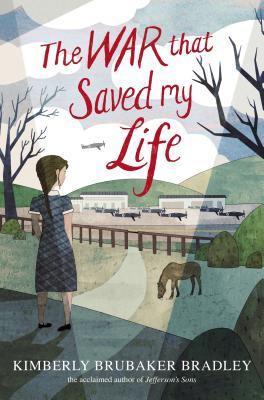
2016 Contenders: The War That Saved My Life, by Kimberly Brubaker Bradley

Ten-year-old Ada has never left her squalid, one-room London apartment. Born with a clubfoot that her abusive and neglectful mother has left untreated, she sits in her chair and looks out the window all day. Caring for and protecting her little brother Jamie provides the only joy and meaning in her life, and ultimately motivates her to begin the painful process of teaching herself to walk. This is all taking place in the run-up to the second world war, though, and when the children of London are evacuated to the countryside, Ada's life changes in every way.

This is not the first novel that has seized on the evacuation of London's children to set its plot in motion. The Lion, The Witch, and The Wardrobe and Bedknobs and Broomsticks are two classic examples. But whereas the plots of those books rely on the benign neglect of the children's temporary guardians, The War That Saved My Life goes in the opposite direction. Only with Miss Susan Smith, their reluctant foster mother, do Ada and Jamie discover for the first time what it means to be cared for and loved.

My instinct is to be cautious in my assessment of this book, because my emotional reaction to it was strong, and because I listened to the audio version, which is narrated masterfully by the inimitable Jayne Entwistle (seriously, go listen to something she has narrated - she is just divine). After some thought, however, I feel confident in recommending it as both emotionally satisfying and finely crafted.

Ada and Susan Smith are nuanced, complex characters who grow in realistic ways throughout the course of the novel. Ada's traumatic experiences are given the narrative weight they deserve. As she begins the process of healing her psychological wounds, she runs up against the setbacks and regressions that would be inevitable for a child who has never felt safe or loved. Susan, who struggles with depression, and who is mourning the loss of her partner Becky, turns out to be the ideal parent for Ada. She approaches Ada and Jamie with patience, and with empathy born of her own experiences with parental disapproval.

If The War That Saved My Life excels in the areas of character development and emotional realism, however, I'm not sure I can say the same about the plot. The conclusion is satisfying and triumphant... as Tess Goldwasser said of Wonder, it makes you want to pump your fist in the air! As such, it stretches the bounds of credibility just a little bit. Ultimately, though, I have to forgive it that, and agree with the Horn Book's Martha Parravano that "this is a feel-good story, but an earned one." (Possibly unlike Wonder.)

It's early in the year, and there are some major challengers on the horizon (can't wait to get my hands on Gone Crazy in Alabama), but I can see The War That Saved My Life being a strong Newbery contender.

Published in January by Dial Books