Showing posts with label Guest Reviewer. Show all posts

Thursday, June 28, 2018

2019 Contenders: The Parker Inheritance, by Varian Johnson


Candice Miller is not enthusiastic about spending the summer in Lambert, South Carolina, the small town where her grandmother used to live and work. It’s not just that her grandmother’s legacy as the first woman and the first African American to serve as City Manager was besmirched by a scandal, but Candice is also worried about present events in her more immediate family – her parents are divorcing, and she and her mother are in Lambert while Candice’s father fixes up their Atlanta house for sale. But when a mysterious letter leads Candice to dig deeper into the story behind her grandmother’s dismissal, the summer promises to get a whole lot more interesting. With the help of Brandon Jones, a book-loving neighbor from across the street, Candice learns about an ugly incident in the town’s history, and the reason that, years later, her grandmother thought that there might be treasure buried under the municipal tennis courts.

This book is not afraid to tackle some big issues, though it does so with a light touch. Candice and Brandon dig into the town’s history of segregation and racism, and readers get a front-row seat to a tennis match between teams from the town’s segregated high schools, and the violent aftermath. There are also present-day issues of bullying, LGBTQ rights, intolerance, and the way the past affects the present. It seems like a lot, and this book is packed pretty full of issues, but Johnson brings everything together into a cohesive whole. It’s timely, well-written, and entirely age-appropriate for middle-grade readers, without softening the harsh truth.

As a puzzle mystery, this book is a little less successful. The clues to the puzzle are all in the letter Candice finds among her grandmother’s belongings, but it’s unlikely that young readers (or even many adult readers) would be able to puzzle them out as Candice and Brandon do. There’s a reference to a mathematical concept that isn’t typically taught outside of calculus courses, plus certain mental leaps that aren’t immediately clear. Readers who want logic puzzles that they can work out along with the characters may be disappointed.

So, is this book a Newbery contender?  I think it’s a title worthy of discussion, at the very least. Will the weaknesses in the puzzle-novel conceit outweigh the strong writing, the well-defined and developed characters, the interpretation of theme, and the appropriateness of style present in this book? Only time will tell!


Published in March by Arthur A. Levine Books


Misti Tidman is the Collection Development Librarian for Youth Materials at the Mansfield/Richland County Public Library (Ohio). She is also one of the bloggers at Guessing Geisel.

Tuesday, September 29, 2015

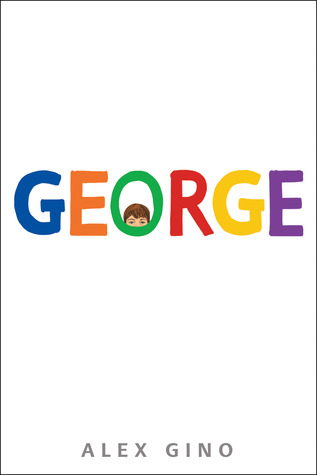
2016 Contenders: George, by Alex Gino

Guest review by Tess Goldwasser:

There are four things I want you to know about George by Alex Gino.

1. George is an important book.

George is a book about George, a boy who is actually a girl. Simply put: George’s outside doesn’t match her inside. She’s a girl trapped, for all intents and purposes, in a boy’s body. George is transgender, and this is hard for her, as you can imagine. Her fourth grade class is performing a play of Charlotte’s Web and George wants to play Charlotte more than anything. But the part is for a girl, and the only person who knows George is really a girl… is George… for now… Dr. Jamie Campbell Naidoo once said to me: books should be mirrors and windows. Good literature should reflect our personal experiences, or offer new perspectives on the experiences of those who are different from us. George will be a mirror or a window to whomever picks it up, and this is important. Dialogue about the transgender experience is important. We should be striving to understand and accept one another.

2. George is a controversial book.

Many will question whether a book about the transgender experience is appropriate for children. It’s a valid question. Are books about slavery appropriate for children? Are books about the holocaust appropriate for children? Are books about Hurricane Katrina appropriate for children? Are books about beloved pets/friends/family members dying appropriate for children? All of these questions are up for debate. I’ll admit there were parts of George that made me uncomfortable, parts that made me wonder: Will a child get this? And if so will it upset them? Ultimately, I feel it’s okay for kids to read things they may not fully understand, and it’s okay for kids to read things that might make them upset. Reading the experiences of characters, and having feelings about them, makes a reader compassionate, and I want the world to be filled with compassionate readers. (And for the kid who is actually living the transgender experience, I believe it’s indubitably 100% appropriate.)

3. George is a painful book.

There are parts of George that are heartbreaking. The conflict between what society expects of George, and what she feels inside is visceral for any sensitive reader. I found the suspense of wondering whether or not George will come out to her loved ones, and whether or not they will accept her, to be downright spine tingling. I lost count of the times I wanted to reach into the book and give George a comforting hug. Despite the book's relatively short length, I wouldn't categorize it as a light read by any means. At one point George says she feels like the butterflies in her stomach have butterflies in their stomachs and all I could think was "YASSS GURL I KNOW!"

4. George is a joyful book.

A colleague, Paula Willey, described George to me as "this year's Wonder" (referencing the uplifting 2012 novel by R.J. Palacio) which caused me to immediately pick it up, because I love books that make you triumphantly pump your fist in the air at the end. George, against the odds, is one of these books. I don't want to spoil the ending for you, but I've never been so happy for someone going to the bathroom in my life. I don't know how authentic the ending is, how many transgender people get to have days like the days George has as she finally embraces her inner self. I hope they do because it was lovely to read, like a fairy tale come true.

I don’t know how much attention this is getting from the Newbery committee. I hope some. I presume it’s getting a lot of attention from the ALA Stonewall Book Award committee. But whether it wins any awards at all is inconsequential to me. What will be most important about this book is that it will hopefully find its way to the readers who need it. (After all, the book is dedicated to “you”)

Tess Goldwasser is a magical ukelele-playing octopus in the guise of a children's librarian. She has served on the Stonewall Book Award Committee and the GLBTRT News Committee, and she is currently chairing the GLBTRT Advocacy Committee. 

Friday, May 15, 2015

2016 Contenders: Echo, by Pam Muñoz Ryan


Echo is proof that Pam Muñoz Ryan loves us and wants us to be happy.

It is a story about the divine and mysterious power of the harmonica.

Otto is lost in the woods. All he has with him is a book and a mouth harp he bought from gypsies that morning. In the dark, he is comforted by three women, Eins, Zwei, and Drei, princesses, lost themselves, kept in the forest by a witch. They cannot leave, but their spirits can be freed by a woodwind. Otto offers up his small instrument…

“But it’s only a harmonica”
“Oh it is much more!” said Eins. “When you play it, you breathe in and out, just as you would to keep your body alive. Have you ever considered that one person might play the mouth harp and pass along her strength and vision and knowledge?”
“So that the next musician who plays it might feel the same?” said Zwei. “It is true. When play you will see and find your way. You will have the fortitude to carry on.”
Drei nodded. “And you will be forever joined to us, to all who have played the harp, and to all who will play it, by the silken thread of destiny.”
The three lost princesses play Otto’s harmonica, and then he plays it, wandering through the pines, until somebody hears him and leads him back home. When he relays his tale, his parents wonder if he’s “affected.” They tell him he must have imagined Eins, Zwei, and Drei. He must have even imagined the gypsies who sold him a harmonica, as there have been none in the village lately…
Suddenly the novel completely shifts. New setting, new characters, new plot. You’re taken aback. Is the author really doing this? Totally dropping a story and expecting us to become invested in a new one? But that’s exactly what happens…

Friedrich is a young man living in Germany in 1933. He and his father and uncle work at the Hohner harmonica factory. They are a happy family of musicians. Friedrich is very talented, with hopes he can attend a conservatory, and one day conduct a symphony. But times are frightening. The Nazi party is beginning to take power. Everyone is concerned with being a loyal citizen. Everywhere they’re discussing the purity of the German race. Even Friedrich’s sister is active in the Hitler youth, and encourages her father to discontinue his friendship with their Jewish neighbor. He doesn’t heed her advice and one day Friedrich comes home to find all of his family’s possessions upturned by the Gestapo, and his father on his way to a work camp to be re-educated. The only thing bringing him any joy is a harmonica he found in a disused part of the factory, emblazoned with an “M,” that sounds more harmonious than any instrument he’s ever played…

The novel shifts again. New setting, new characters, new plot. But what about Friedrich? Can he and his uncle hatch a plan to have his father released from the work camp? Will his sister come to her senses and help them? Will he make it into a conservatory and become a conductor? (Come to think about it, we never found out what became of Otto!) Forget about all that for now.

Mike and his little brother Frankie are in a Pennsylvania orphanage in 1935. Mike is worried. He’s heard a rumor that the younger children at the orphanage will all soon be transferred to a state run orphanage. Not only will Mike and Frankie be separated, and they’ve never been separated, but the conditions at the state home are awful, kids worked to the bone, dying of diseases. Miraculously, two men arrive at the orphanage. They represent an heiress who wishes to adopt a child. A child who is musically inclined. And it just so happens the only two boys who can play the old piano at the orphanage are Mike and Frankie. Oh, and she wants to adopt them that very day. The brothers are whisked away to the stately home of Eunice Dow Sturbridge. But something’s not quite right. “Aunt Eunie” does not receive her wards warmly at all. In fact she seems angered by their presence despite their many attempts to win her over. Mike discovers she didn’t really want to adopt, rather it was a stipulation of her father’s will, and that she had requested a young girl, not two boys, particularly an older boy. Mike wonders if he leaves, could she learn to love Frankie at least? He learns of a traveling harmonica orchestra that are auditioning for new players. If he can join Hoxie’s Harmonica Wizards, he’d have a place to go, and Frankie could hopefully get some attention from their new mother. And he’s procured just the right instrument, a remarkable harmonica, emblazoned with an “M,” to practice on.

The novel shifts again. New setting, new characters, new plot. But what about Mike and Frankie? Will Aunt Eunie ever open her heart to them? Will Mike earn a spot in the orchestra? Wait, is that Friedrich’s harmonica? Hey, whatever happened to Friedrich? (And whatever happened to Otto?) Forget about all that for now.

Ivy Lopez is the daughter of migrant farm workers in California in 1942. Of all her classmates, she has been chosen to perform a harmonica solo on the radio and she’s so excited. It’s not to be however, because her family must abruptly move. Her father has taken a job overseeing the farm of the Yamamoto family, who’ve been unfortunately detained in a Japanese Internment camp. The Lopez family will work their land, and watch over their home, until they’re allowed to return, and if they like how they’ve kept the place, they will keep her father on as a hired hand. Their families are now linked in a way. Ivy is extremely disappointed that because her family is Latino, she must attend a separate school, an annex of the school her more privileged peers attend. Ivy plays her harmonica, a beautiful thing, emblazoned with an “M,” the music it makes transcending the injustice in the world, and hopes to rise above all the racial prejudice she’s confronted with.

The novel shifts again. But we weren’t finished with Ivy! What happens to her? How did she get Mike’s harmonica? And where did he end up? And, seriously now, did Friedrich even survive Nazi Germany? (And Otto. Dammit. Why did you even tell us about Otto?)

In the final 40 pages, Pam Muñoz Ryan beautifully ties EVERYTHING up, in a gorgeous bow, her gift to her readers, who have hung on this long, who have emotionally invested in not one, but four separate stories. We who have kept turning pages, perhaps first out of duty, but then with delight, get to figuratively open this present and see what’s become of Friedrich, Mike, Ivy, even Otto, and their families, and witness how artfully their lives were intertwined by the magic of one harmonica.

This book, in my humble opinion, is nothing short of a masterpiece. It’s a hell of a way to kick off 2015 Newbery buzz. But it’s so much more. This is a book for people of all ages to be entranced by. It is enchanting. It is wonderful. It’s honestly one of the greatest things I’ve read in a really long time (and I read a lot, people). I hope that you’ll give it a try, not just because it could win a medal, but because it is a thing to behold, a force to be reckoned with, an emotional rollercoaster that leaves you wanting nothing at the end, except maybe to hold the book to your chest, and give it a big hug. 

 Published in February by Scholastic


Today's guest reviewer is Tess Goldwasser, Youth Services Librarian, St. Mary's County Library, Maryland. Tess also writes about picture books at Kid's Book Blog.

Friday, October 17, 2014

2015 Contenders: The Meaning of Maggie, by Megan Jean Sovern


Maggie Mayfield, a precocious sixth grader, is given a beautiful journal for her birthday - the perfect gift for an aspiring memoirist and future President of the United States! Maggie dutifully records her year: a year, it turns out, that sees her father slowly lose his faculties to multiple sclerosis. Maggie keenly observes her family dynamics while pushing herself academically and emotionally through the trials and triumphs that await her.

Maggie is a bit like a younger version of Jaclyn Moriarty’s titular character in The Murder of Bindy Mackenzie. She is an extraordinary know-it-all, a sassy lass who insinuates herself into situations without a shred of self-awareness, one whose embarrassing lack of social cues simultaneously rewards and punishes her. She’s winning her umpteenth consecutive Student of the Month award while flopping spectacularly at physical education. This is a kid who elicits cheers and groans, often within a single paragraph.

Sovern is a first-time author, and The Meaning of Maggie is reportedly a fictionalized memoir. This closeness to the source material is what initially makes the novel intriguing and enjoyable, but also what ultimately buckles the proceedings entirely.

Maggie’s narration is consistently enjoyable. As the youngest sister, she paints energetic portraits of her older siblings. Layla, the eldest, is too cool to be even vaguely aware of Maggie’s existence, and Tiffany, the shrill middle sister, approaches caricature-like status, especially in Maggie’s snarky, hilarious footnotes. “When Layla was little Dad called her Layla Hayla because he thought she was the bee’s knees. He calls me “Mags” because it sounds cool and he calls Tiffany “Tiffany” because if you call her anything else, she loses her mind” (p. 55).

As the family comes to terms with Dad’s “sleepy” limbs, Maggie’s observations become heartbreaking. She seems innocent of, even removed from, the situation’s gravity, and the family’s interactions between and among each other resonate with a sad, heavy hope. Small, simple revelations paint a family in crisis, even if Maggie remains completely and curiously unaware. Maggie’s slow understanding of the severity of her father’s condition serves as the book’s emotional crossroads, and Sovern handles the awakening with grace. Sovern’s treatment of multiple sclerosis is thoughtful, compassionate, and immediate. It’s a beautiful portrait of a family dealing with the unthinkable.

Reviewers, both for professional publications and on Goodreads, have indicated that the novel’s time period (the late 1980s) seemed flimsy and awkward. It certainly isn’t fully realized nor is it integral to the story, and Sovern unfortunately stumbles with several anachronisms. I was Maggie’s age in 1988, and, to my recollection, remember almost no discussion of medical marijuana; nor do I recall girls being referred to as “hotties." I’m fairly certain, too, that the use of full-stops as emphasis (like. doing. this.) is a more recent literary device, and that most 11-year-olds would not have employed such techniques in their journals.

Maggie, too, is a strangely inconsistent character, even when her musings are hilarious. This is a child who reads voraciously and is academically superior to her peers, yet doesn’t know what a spleen is. She’s childish and mawkish on some pages and way-beyond-her-years on others. The “precious” quotient is through the roof, and not in the way puppies are precious. More in the way that hipsters who enjoy pickling foods are precious.

Despite these flaws, the book is enjoyable and, in my school library, it has circulated like crazy. My students, especially the girls, love it, and I can understand why it is so dear to them. Maggie is a sparkplug of a character, and her wittiness will appeal to many young readers. The Meaning of Maggie, in terms of Newbery-ness, lacks any distinguishing quality, and will likely be but a blip on the radar come awards season. Although its treatment of multiple sclerosis is sensitive and uplifting, I doubt, too, that it will nab a Schneider Family Book Award (which, if I were to bet, will go to Lisa Graff’s delightful Absolutely Almost).

Sorry, Maggie. My students love you, but I don’t think the Newbery committee will.


Published in May by Chronicle Books 


*****


Today's guest reviewer is Joe Prince, Librarian at Marshall Middle School, and Chair of the North Allegheny (PA) School District Library Department. Check out his 6th Grade Mock Newbery -- it's great!

Tuesday, August 26, 2014

2015 Contenders: The Mark of the Dragonfly, by Jaleigh Johnson


What is The Mark of the Dragonfly by Jaleigh Johnson? Is it Steampunk? Is it Sci-fi? Is it Fantasy? IT'S ALL THE THINGS.

Piper is an orphan living in Scrap Town 16. She makes a living scavenging junk found in meteor fields. She's an eerily talented machinist, and hopes to one day make enough coin to leave for better prospects in the Merrow Kingdom's capital city.

One day, after a particularly harrowing meteor shower, she happens upon a destroyed caravan, with a girl inside, who mysteriously bears the mark of the dragonfly: an intricate tattoo sported only by favorites of the King himself. Piper nurses the girl back to health...to find she's quite a peculiar person. Anna is obsessed with order and organization, seemingly constantly preoccupied with analyzing whether things make logical sense to her, and her head is filled to the brim with information, not all of it practically useful. Before Piper can decide if she's made a huge mistake inviting this strange girl into her life, they're confronted by a man who claims to be related to Anna. Anna has no clear memory of him, and certainly bad vibes about him, so Piper and Anna flee the man, and the scrap town, aboard the 401, an old but beautiful train. Anna's dragonfly buys them passage, but not the trust of the train's head of security, Gee, a young man with a chip on his shoulder, and inhumanly green eyes.

The story takes off from here, as we try to unravel the mystery of who Anna is, and why anyone would be after her.

This book has got a bit of everything: Mythology, high speed chase scenes, cross-bow show-downs, magic, plot twists, even a little chaste romance. Also: A whole heck of a lot of GIRL POWER.

In regards to its literary merit, I found it to be well written, with dynamic characters, and a carefully constructed story line. Some may see Johnson's world building as a mish-mash of genres, but I liked it! Who says you can't mix your fantasy with your sci-fi? Probably the same fascists who don't want you mixing chocolate with peanut butter. It only makes the book more appealing, in my opinion. I can already think of a ton of kids who are going to be so hyped when I tell them about this book.

Is it a contender for the Newbery? I say why not? It's kind of "out there," but so were When You Reach Me and The Graveyard Book, and it got a starred review from Kirkus, which is typically a good sign. I think it's definitely praise-worthy, and I hope it's at least on the committee's radar. If nothing else, it gets two thumbs up from this humble librarian.

*****


Today's guest reviewer is Tess Goldwasser, Youth Services Librarian, St. Mary's County Library, Maryland. Tess also writes about picture books at Kid's Book Blog.


Thursday, July 3, 2014

2015 Contenders: Greenglass House, by Kate Milford


Despite the fact that his parents run an inn, Milo was expecting a nice, peaceful vacation.  After all, the week of Christmas is usually not a busy time at Greenglass House.  But then, on the first morning of the holiday break, the guests just start coming . . . and coming . . . and coming.  Pretty soon, the inn is feeling much too full for Milo’s comfort.  His parents even ask their part-time cook to come up and help.  When her daughter Meddy, a girl just about Milo’s age, attempts to get him to talk to her, Milo is feeling disgruntled and tries to brush her off.  But Meddy won’t be brushed off – she’s sure that these people are all at the inn for a reason, and she and Milo come up with a way to investigate while appearing to be playing an innocuous role-playing game.  They soon discover that the guests are hiding more than one secret between them.  Some of the guests seem to know each other, though Milo wouldn’t call them friends.  Seemingly unimportant articles go missing from some of the guests’ rooms, and Milo hears the occasional sneaky set of footsteps on the creaky staircase, signaling that someone is where they are not supposed to be.  All the secrets and mysteries center on Greenglass House itself – and Milo’s home, where he has lived all his life – eaten, slept, done homework, goofed off – is suddenly much more fascinating and mysterious.  Is a smuggler’s treasure hidden somewhere in the house?  Can Milo and Meddy find it first?

This book rises to excellence in several different ways.  The setting is the first thing that grabs you: a hilltop inn, accessible by inclined railway from the waterfront of the Skidwrack River, frequented by smugglers of various unlikely items (flower bulbs and fountain pens, for instance).  Milo’s world is approximately contemporary to ours and shares some things (Christmas, the War of 1812) while others are charmingly different.  These differences appear as grace notes throughout the story, never piled on too heavily in one place.  Populating that setting are the characters.  The guests at the inn start out as quirky caricatures, but blossom and develop as the story rolls on.  And of course Milo, as main character, has plenty going on.  For one thing, he’s adopted and of Chinese descent, so there’s an undercurrent of him wondering about his birth family and heritage, while still loving his adoptive parents.  This adds depth to the story without ever overpowering the main plot.  Milo is also the sort of kid who values routine and gets agitated when things do not go according to plan, and much of his character development involves him being stretched in new directions by unforeseen circumstances.

 In terms of plot, this book delivers a good mix of coziness and adventure – there is exploration of the various nooks and crannies, hot chocolate and scheming by the Christmas tree, and covert investigation with the risk of discovery at any moment.  One thing I really appreciated about this book is how Milo and Meddy’s adventures feel like adventures while still being authentic kid experiences, things that are not out of character or impossible for a couple of kids in a large house full of strange adults.  As an added bonus, there are stories within the story as Milo, prompted by an old book lent to him by one of the guests, encourages all of the visitors to share stories in the evening.  Milo hopes that the stories they share will reveal their secretive reasons for staying at Greenglass House, and many times they do, enriching the book and helping bring all of the plot elements together in the end.

I found a lot to like in this book, and not much to criticize, probably because I’m the sort of reader who likes cozy mysteries in old houses with quirky characters and elements that feel a little bit like fantasy at times.  Another reader might find that the pacing lags at the points where the guests are telling their stories, but this didn’t bother me at all.  I could mention that Milo’s parents are arguably not as well-developed as some of the other secondary characters, but not everyone has to be quirky, and their main role is to provide stability for Milo (while also being preoccupied enough with the running of the inn to let him do his own thing without too much interference).  Is this book a Newbery contender?  Possibly.  This is a particularly strong year for middle-grade fiction, and mystery is a genre that rarely gets a lot of acclaim.  However, I think it’s earned a spot at the front of the pack, at least.

Publication in August by Clarion Books.
*****

Today's guest reviewer is Misti Tidman, Children's Librarian at the Licking County Library System (Ohio).  She is a fellow 2014 Morris Seminar participant, and blogs at Kid Lit Geek.